Cups to Grams: Flour, Sugar, Butter and More
How many grams in a cup of flour, sugar, butter, rice or honey? A per ingredient table with half and quarter cups, sourced from USDA and King Arthur.
By the Matlaro teamPublished 6 min read
One US cup of all-purpose flour weighs about 125 g, a cup of granulated sugar about 200 g, a cup of butter about 227 g and a cup of uncooked long-grain rice about 185 g, according to the USDA's food database. There is no single "cup to grams" number, because a cup measures volume and every ingredient packs differently. The table below gives the weight of a cup, a half cup, a quarter cup and a tablespoon for the ingredients that come up most.
The table
Weights per US cup from USDA FoodData Central (FDC id in the last column). Half cups, quarter cups and tablespoons are worked out from the cup unless USDA lists them separately. Rolled oats come from the King Arthur ingredient weight chart, because the USDA entries we use do not include them.
| Ingredient | 1 cup | ½ cup | ¼ cup | 1 tbsp | Source |
|---|---|---|---|---|---|
| All-purpose flour | 125 g | 63 g | 31 g | 8 g | USDA 169761 |
| Granulated sugar | 200 g | 100 g | 50 g | 13 g | USDA 169655 |
| Brown sugar, packed | 220 g | 110 g | 55 g | 14 g | USDA 168833 |
| Brown sugar, not packed | 145 g | 73 g | 36 g | 9 g | USDA 168833 |
| Powdered sugar, unsifted | 120 g | 60 g | 30 g | 8 g | USDA 169656 |
| Butter | 227 g | 113 g | 57 g | 14 g | USDA 173430 |
| Long-grain white rice, uncooked | 185 g | 93 g | 46 g | 12 g | USDA 169756 |
| Honey | 339 g | 170 g | 85 g | 21 g | USDA 169640 |
| Whole milk | 244 g | 122 g | 61 g | 15 g | USDA 171265 |
| Unsweetened cocoa powder | 86 g | 43 g | 22 g | 5 g | USDA 169593 |
| Rolled oats | 89 g | 45 g | 22 g | 6 g | King Arthur |
Why a cup of flour and a cup of sugar weigh different amounts
A cup holds the same space every time. What changes is how much of an ingredient fits into that space. Sugar crystals are dense and settle tightly, so a cup of sugar weighs about 200 g. Flour is light and full of air, so the same cup holds about 125 g. Honey is heavier than water, so a cup of it is 339 g.
That is also why two good sources disagree. King Arthur puts a cup of flour at 120 g and USDA at 125 g. The difference is how the cup is filled: spooning flour in and levelling it off gives less than scooping the cup straight through the bag, which presses it down. If a recipe is from a particular baker, use their weights when they give them.
Butter: sticks, cups and tablespoons
American recipes measure butter in sticks. USDA lists a stick at 113 g, which is half a cup and 8 tablespoons. So:
| American recipe says | Weigh |
|---|---|
| 1 stick | 113 g |
| ½ stick | 57 g |
| 2 sticks or 1 cup | 227 g |
| 1 tablespoon | 14 g |
European butter usually comes in 250 g blocks, so a cup of butter is a little less than one block.
Brown sugar, packed or not
"Packed" means pressed firmly into the cup until it holds its shape when turned out. It makes a big difference: USDA lists a packed cup of brown sugar at 220 g and an unpacked cup at 145 g. If a recipe just says "1 cup brown sugar", look for a note in the recipe; when in doubt, packed is the safer guess for cookies and cakes, because unpacked gives you a third less sugar.
How to convert a whole recipe
- 1
Weigh the dry ingredients
Use the table for flour, sugar, rice, oats and cocoa. These are where cups are least accurate.
- 2
Measure liquids in millilitres
Milk and water are close to 1 g per ml, so a cup of milk is about 240 ml or 244 g.
- 3
Weigh the sticky things
Honey and syrup are far heavier than water. Weighing them also saves scraping out the cup.
- 4
Leave the spoons alone
Teaspoons and tablespoons stay as they are.
- 5
Write the grams on the recipe
Next time you do not need to convert again.
If you also need to make the recipe bigger or smaller, convert to grams first and scale second. Grams scale cleanly, cups do not; we explain why in how to scale a recipe. And if the recipe is an old family one in teacups and "a knob of butter", digitizing a family cookbook has a section on old measures.
Cups to grams in Matlaro
Matlaro converts the amounts in catalogue recipes to the measurement system your phone uses. On a phone set to metric, a cup of a dry ingredient is shown in grams, a cup of a liquid in millilitres, and ounces and pounds in grams. Spoons stay spoons. The weights come from USDA portion data, Matlaro counts a cup as 240 ml, and the result is rounded to something you can weigh.
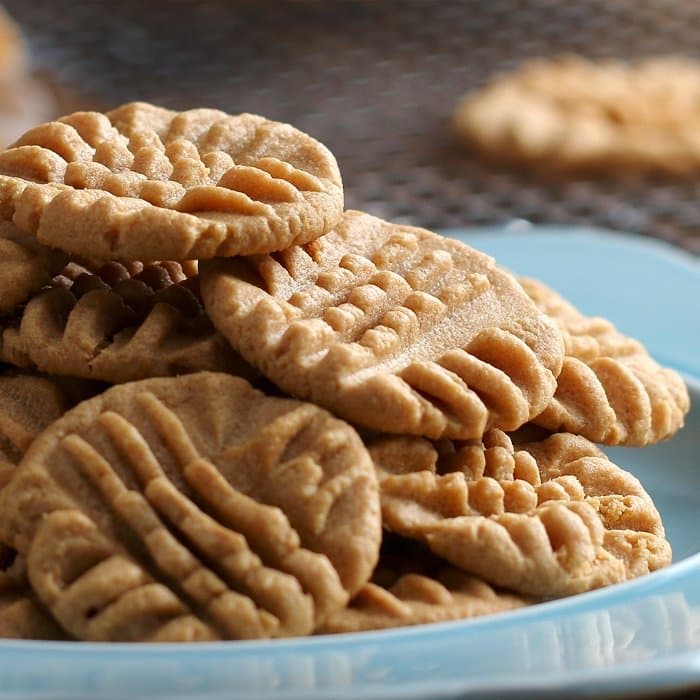
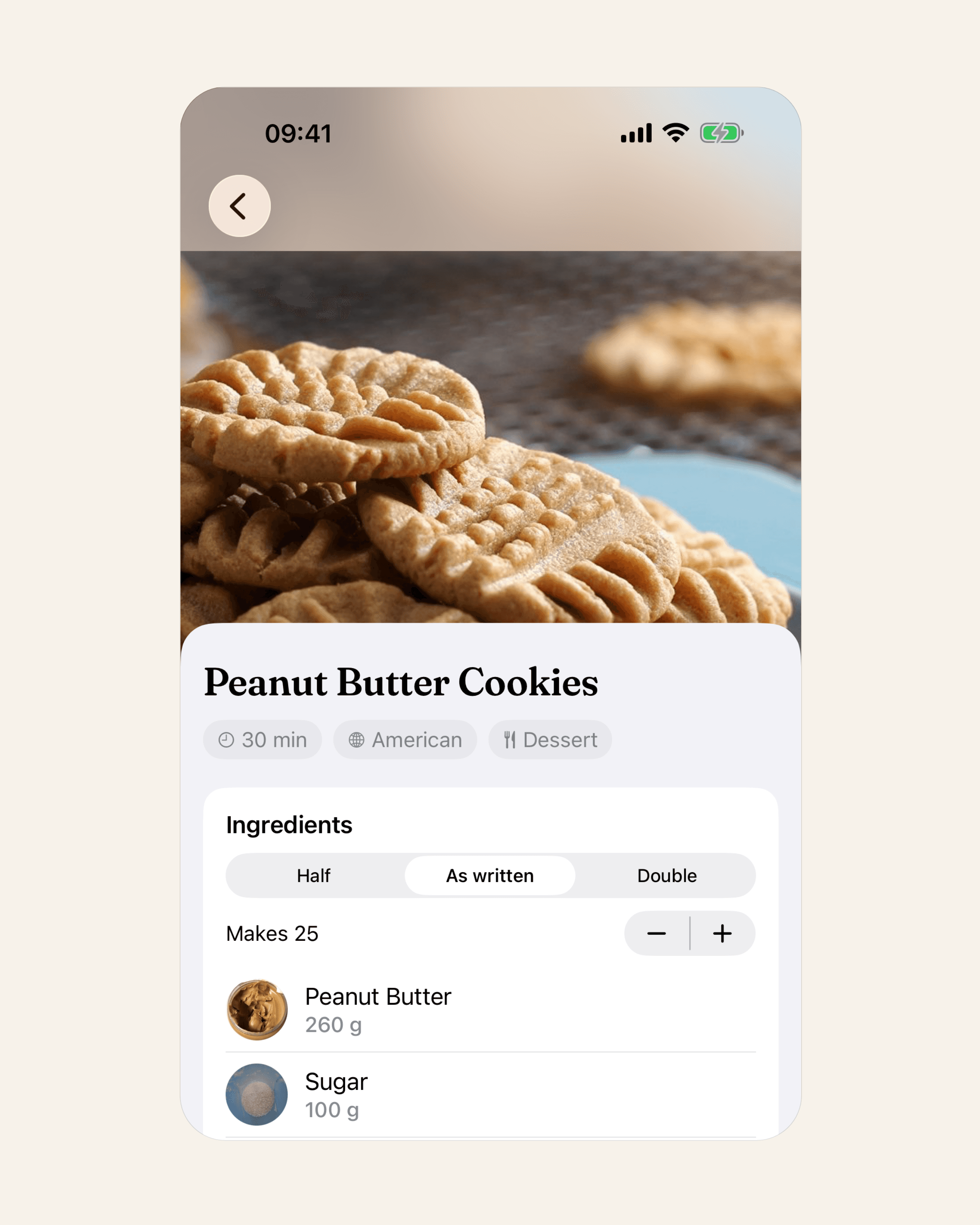
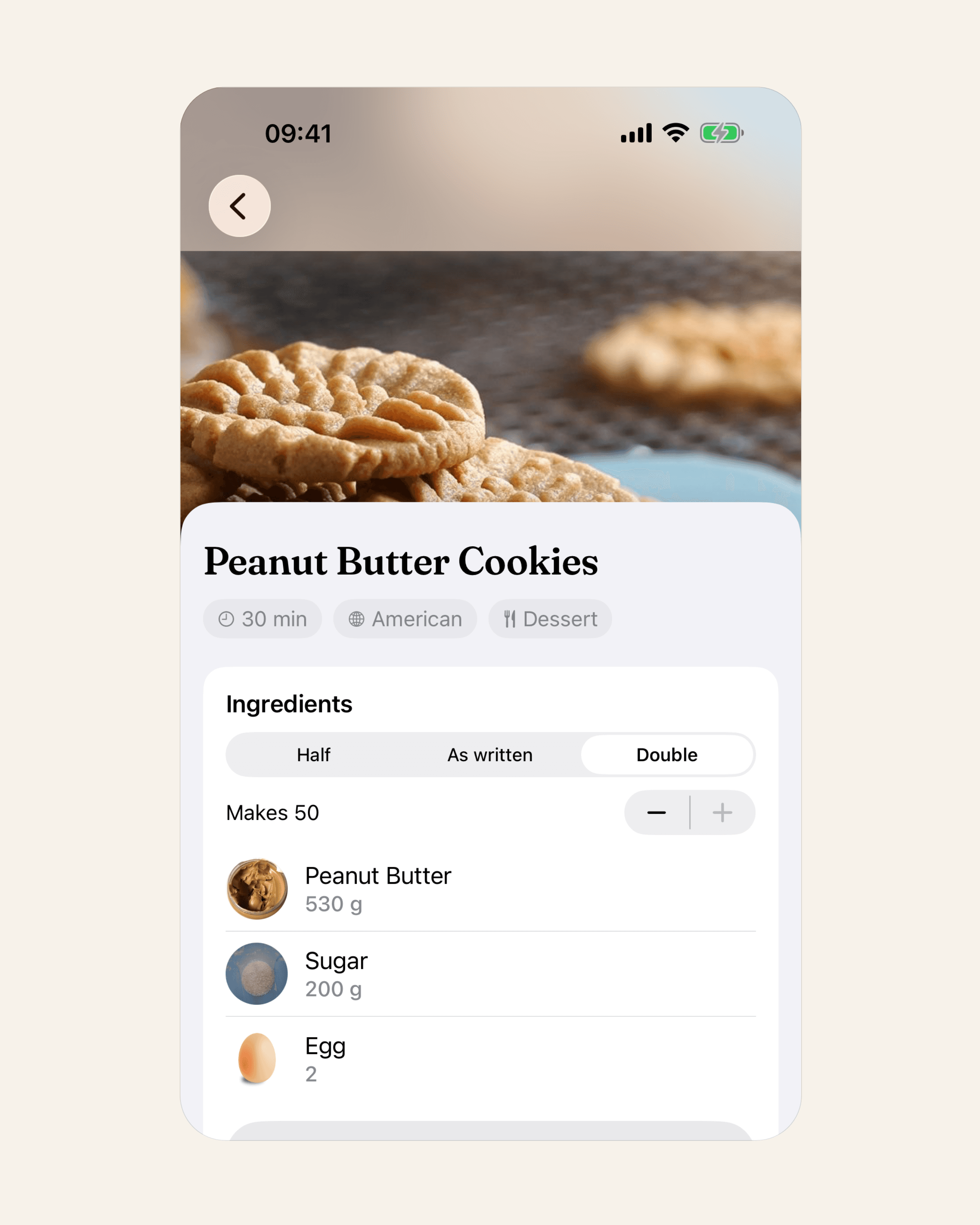
Peanut Butter Cookies
- 30 min
- Makes 25
- American
- 7 steps
Ingredients
 Peanut Butter260 g
 Sugar100 g
 Egg1
Cook it step by step in Matlaro

Recipe data and imagery: TheMealDBOriginal recipe
In the Matlaro catalogue, Peanut Butter Cookies are written in cups: 1 cup of peanut butter and ½ cup of sugar. On a metric phone they show as 260 g and 100 g. The Vegan Chocolate Cake's 1¼ cups of self-raising flour shows as 160 g. Where no weight is known for an ingredient, the amount is shown in millilitres rather than guessed, so a half cup of coconut sugar reads 120 ml.
Frequently asked questions
How many grams is 1 cup of flour?
USDA FoodData Central lists 1 cup of all-purpose flour at 125 g. King Arthur's chart says 120 g, because it assumes the flour is spooned in rather than scooped.
How many grams is 1 cup of sugar?
About 200 g for granulated sugar, 220 g for packed brown sugar and 120 g for unsifted powdered sugar, according to USDA.
How much is a stick of butter in grams?
113 g. A stick is half a cup, or 8 tablespoons.
How many grams is a cup of uncooked rice?
USDA lists 185 g for a cup of uncooked long-grain white rice.
How many millilitres is a cup?
Matlaro counts a cup as 240 ml, the usual figure for American recipes. For liquids like milk and water, that is also close to 240 g.
Photo credits
- Peanut Butter: 2020-03-24 20 57 22 An open jar of Skippy Creamy Peanut Butter in the Dulles section of Sterling, Loudoun County, Virginia.jpg, by Famartin, Wikimedia Commons, CC BY-SA 4.0
- Sugar: Sugar 1.jpg, by Gaurav Dhwaj Khadka, Wikimedia Commons, CC BY-SA 4.0